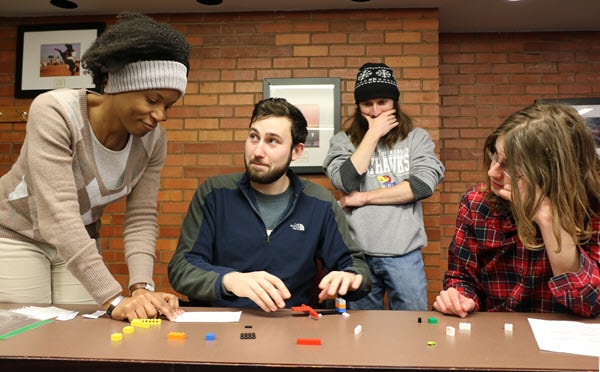
Undergrad TAs learn the basics of a new educational role

By Doug Ward
Here’s some sage advice to start the semester: Don’t be a jerk.

By Doug Ward
Here’s some sage advice to start the semester: Don’t be a jerk.
American higher education has taken a beating over the last 40-plus years.
Many of those blows came from the outside. Many others were self-inflicted. I won’t rehash those here, other than to say that higher education has done a poor job of fighting back. Much of the time, it has seen itself as above the fray. Its arrogance not only blinded it to its own shortcomings but let critics paint an unflattering portrait that has lingered in the minds of millions of Americans.
By Doug Ward
The University of Kansas has made many gains in its recruitment of minority students, who now make up 20.6 percent of the student body. By at least one measure, though, the university still has considerable work to do.
The criticism of liberal education often carries a vicious sting. For instance, listen to Jeb Bush, the former Florida governor:
By Doug Ward
Student motivation is one of the most vexing challenges that instructors face. Students can’t learn if they aren’t engaged, and serious classroom material often fails to pique the interest of a generation that has grown up with the constant stimulation of smartphones, social media and video on demand.
Two vastly different views of assessment whipsawed many of us over the past few days.
The first, a positive and hopeful view, pulsed through a half-day of sessions at KU’s annual Student Learning Symposium on Friday. The message there was that assessment provides an opportunity to understand student learning. Through curiosity and discovery, it yields valuable information and helps improve classes and curricula.
By Doug Ward
A peer review of teaching generally goes something like this:
An instructor nears third-year review or promotion. At the request of the promotion and tenure committee, colleagues who have never visited the instructor’s class hurriedly sign up for a single visit. Sometimes individually, sometimes en masse, they sit uncomfortably among wary students for 50 or 75 minutes. Some take notes. Others don’t. Soon after, they submit laudatory remarks about the instructor’s teaching, relieved that they won’t have to visit again for a few years.
By Doug Ward
BLOOMINGTON, Indiana – We have largely been teaching in the dark.
By that, I mean that we know little about our students. Not really. Yes, we observe things about them and use class surveys to gather details about where they come from and why they take our classes. We get a sense of personality and interests. We may even glean a bit about their backgrounds.

By Doug Ward
I’m frequently awed by the creative, even life-changing, work that students engage in.
By Doug Ward
Projects associated with programs at the Center for Teaching Excellence have led to national recognition for two KU professors.