By Doug Ward
I’m not a fan of rankings, which try to squeeze vast amounts of complex, nebulous data into a single number. So I look at the recently released AI Readiness Rankings with a skeptical eye, especially because it comes from a group selling consulting services.
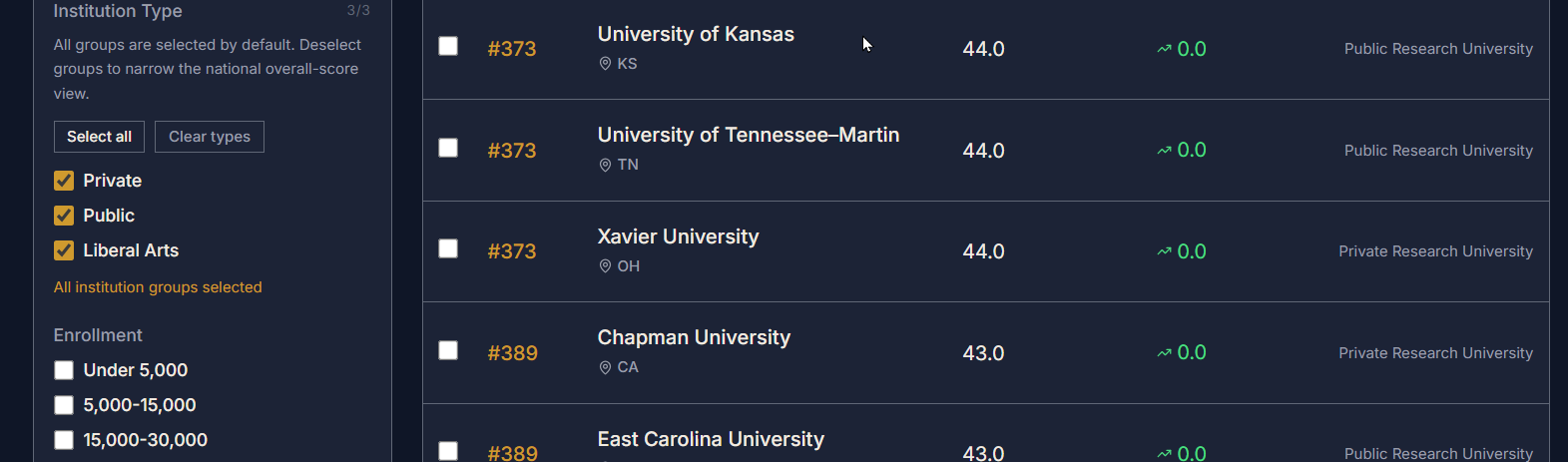
Unfortunately, its assessment seems about right. Out of 496 universities, KU was tied with 15 other universities at 373rd in terms of AI readiness. The rankings defined that readiness as how well universities “use and provide AI for students, teaching, research, support, governance, and operations.”
Some will no doubt see that bottom-quartile ranking as a good thing. I don’t. It reflects widespread inaction at a time when students need and want guidance on generative AI; when employers are increasingly demanding that students demonstrate an ability to work with AI; and when rapid advances in AI offer new opportunities for discovery and for improving the university’s work at many levels.
Many faculty members are doing an excellent job of integrating AI literacy into courses and helping students gain the judgment and experience they will need in working with AI tools. They are experimenting and finding ways to help students learn AI skills while maintaining core learning.
We all need to do much, much more.
AI is not a question of whether. It’s an imperative for and. We must help students build cognitive depth and learn to use generative AI ethically and effectively. We must help them think and learn independently and recognize the potential of AI to go even deeper. We must emphasize the development of human skills and find ways for AI to supplement and augment our work. We must help students learn when and how to use AI and when not to use it. We must work with the curricula of the present and envision a future curricula in which AI works alongside us.
That's an enormous task, one that we can't achieve by simply staying the course. It will require experimentation and flexibility. It will lead us into many dead ends. That's the nature of learning. That's the only way we will find a meaningful way forward, though.
Scott Latham, co-founder of the AI Readiness Rankings, told Inside Higher Ed, that he and his colleagues wanted “to offer a sober perspective on how this technology is extending its footprint into the academy.”
He added: “The faculty that it’s going to put out of a job are those that continue to resist and don’t experiment. They have to experiment and shift your perspective because AI is not going away. There is no endgame where five years from now there are faculty across the academy that say, ‘Wow, it’s good we didn’t buy into AI. It’s gone.’ That’s never going to happen.”
I agree. We have an opportunity to rethink and reshape higher education, even from the bottom quartile. To do so, we have to stop looking at generative AI as a question of whether and embrace the possibilities of and.