Education Matters: risk-taking, learning by doing, repackaged trends
Education Matters: risk-taking, learning by doing, repackaged trends
Using technology to help students take risks
Using technology to help students take risks
Forget the technology. Instead, focus on the humanity.
That’s the advice of Kirstin Wilcox, a lecturer at the University of Illinois-Champaign. Wilcox isn’t anti-technology. Rather, she says, learning technology generally means something that helps deliver class material for large lecture classes, not something that helps students understand literary texts in small classes.
Most Americans still see a four-year degree as important, but it is not at the top of the list of things that will help someone achieve a successful career, a recent Heartland Monitor poll suggests.
In the poll, respondents ranked technology skills, an ability to work with diverse groups of people, keeping skills current, and having family connections above a four-year college degree.
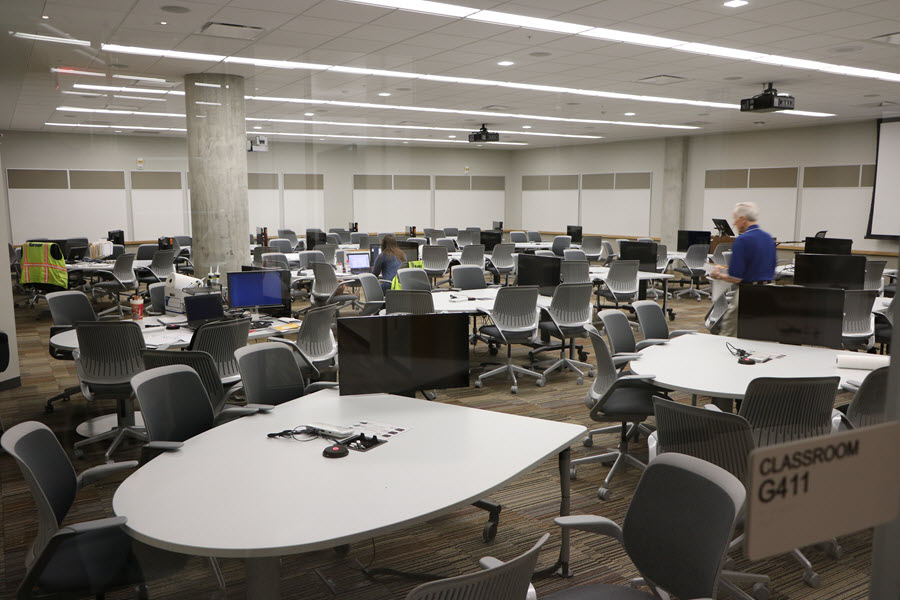
The School of Engineering at KU will open several new active learning classrooms this fall.
I’ve been involved in planning some of the summer training sessions for the rooms, so I’ve had a chance to explore them and see how they will work.
After a session at the KU Teaching Summit last week, I spoke with a faculty member whose question I wasn’t able to get to during a discussion.
Microsoft’s Office software has long been the standard in business and education.
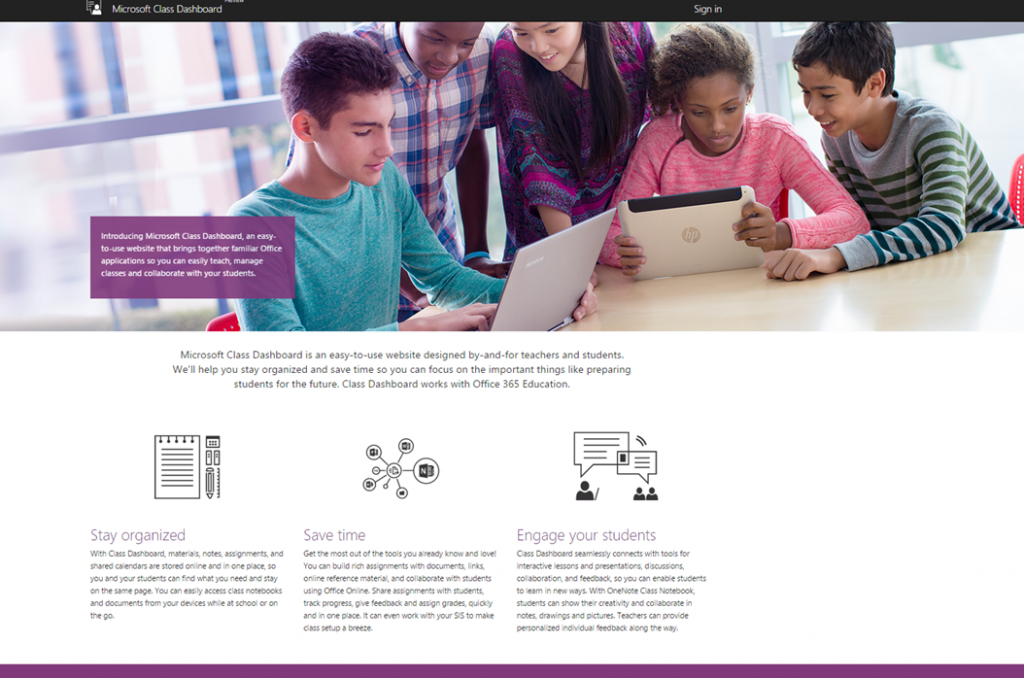 In a webinar this week, though, Microsoft showcased an online amalgamation of its software that looks very much like a learning management system.
By Doug Ward
In one of my favorite poems, Taylor Mali mocks sloppy writing, juvenile articulation, and the general inability to put together words in a meaningful way. That poem, “Totally like whatever, you know?,” was brought to life by Ronnie Bruce’s animation (below), providing even more punch to Mali’s magnificent ending:
Because contrary to the wisdom of the bumper sticker,
Hundreds of start-ups and established companies promoted their ideas and educational technology products at the ASU GSV Summit last week in San Diego. Many were quite good, even if they didn’t live up to the magic that some of them promised.
The ASU GSV Summit bills itself as a gathering of entrepreneurs, policymakers, business leaders and educators who want “to create partnerships, explore solutions, and shape the future of learning.”
Three students in an upper-level physics class designed and built a tabletop lightboard for their final project this semester.
Lightboards are used in creating online videos for classes. They allow instructors to write on a glass pane as they would a whiteboard. A camera is positioned facing the instructor, capturing the writing on the glass as the instructor speaks. The image must then be flipped so that the writing can be read in the video. The approach is especially popular among STEM instructors.