student engagement


Ambiguity goes in search of the right answer


Ambiguity goes in search of the right answer

The note cards I handed out to students in my hybrid class last week drew astonished looks.

Each contained a hand-written list of three things: events, people, animals, objects, locations, movies, songs, television shows. All were random, created one evening in a stream of consciousness. For instance:
Education Matters: Unconventional learning


Education Matters: Unconventional learning

Earlier this week, I wrote about the unlikelihood of competition and cultural forces pushing higher education to “unbundle” its degrees and services.

Why change our approach to teaching?


Why change our approach to teaching?

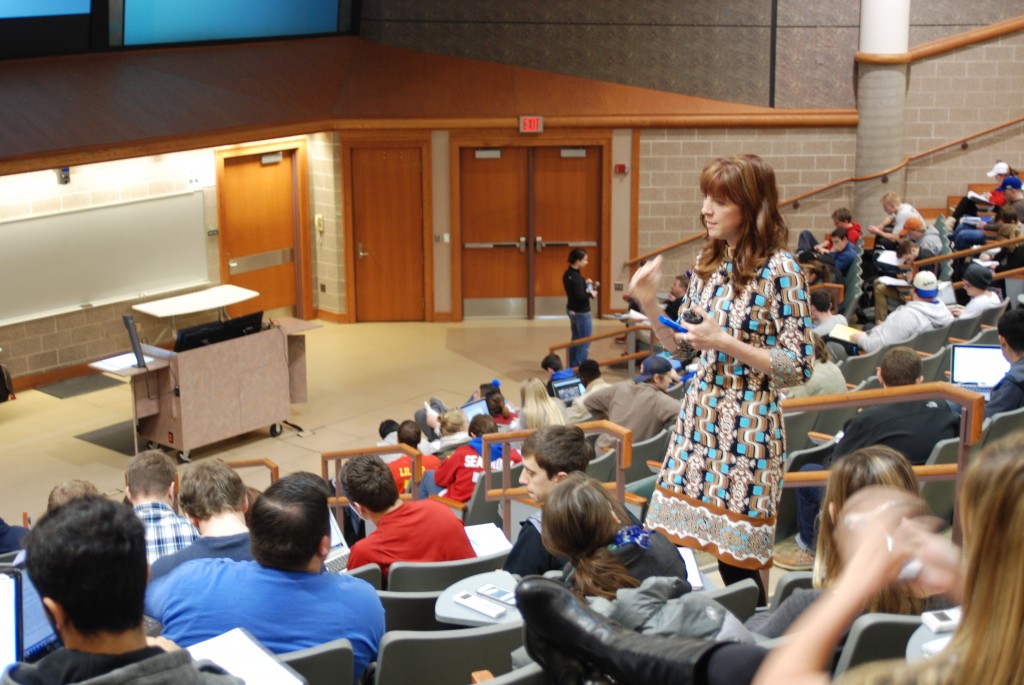
Jennifer Roberts walks through the lecture hall during her geology class, above and bottom, working with students on collaborative problem-solving. Several teaching assistants also help in the classroom.

Jennifer Roberts first noticed the difference a few years ago in Geology 101.

Education Matters: ‘Swirling’ students and online communication


Education Matters: ‘Swirling’ students and online communication

James Burns of Boston College uses a term I hadn’t heard before: “swirling students.”

Writing in The Evolllution, Burns says swirling students are those who move in and out of college, collecting a few hours here, a few hours there as they move toward a degree. They often have full-time or part-time jobs, families, health problems or financial challenges, he says.

Students offer a list of essentials for learning


Students offer a list of essentials for learning

Asked to describe the things that help them learn, students provide a remarkably consistent list:

  • Engagement
  • Interaction
  • Clarity
  • Openness
  • Accessibility
  • A sense of belonging

That’s hardly a complete list, but those ideas came up again and again during a focus group at KU’s recent Student Learning Symposium. Not surprisingly, those same components come up again and again in research on learning.

What students want you to know about education


What students want you to know about education

Education changes people.

Those of us who teach know that well. We see students transform during their degrees, and sometimes during a semester. Their skills improve. Their thinking deepens. Their confidence blossoms.

Subscribe to student engagement